Two support measures are provided to the Ocean Colour (OC) community by the European Commission Copernicus Programme in the framework of the FRM4SOC-2 project. - CALL CLOSED -
- Short-term (free) rental of a calibrated and fully (FRM) characterised in situ above-water radiometric OC measurement system and
- Free calibration of your own OC radiometer set.
This time, shipping and customs costs are also covered for both opportunities!
Background
The FRM4SOC-2 project (Fiducial Reference Measurements for Satellite Ocean Colour Phase 2), funded by the European Commission as a part of the EU Copernicus Programme and implemented by EUMETSAT, was launched in April 2021 with the aim of developing an operational and sustained network of radiometric in situ measurements and achieving a fiducial reference measurement (FRM) standard as defined by the Committee on Earth Observation Satellites (CEOS). The goal is to ensure the highest-quality in situ measurements for satellite product validation and algorithm development. The project activities strive to support the OC community by developing practical guidelines for in-filed measurements as well as calibration, characterisation, and the use of radiometric instruments. Also, by providing tools for processing measurement data with uncertainties, and data validation. In 2022, the FRM4SOC-2 project workshop recommended, inter alia, creating a pool of calibrated and characterised radiometric sensors available for rent to the OC community, and providing Copernicus-supported free calibrations for OC radiometers. Such an instrument pool and calibration opportunity have been established as a part of the FRM4SOC-2 project activities.
The call consists of two opportunities
1. Short-term (free) rental of a calibrated and fully (FRM) characterised in situ above-water radiometric OC measurement system
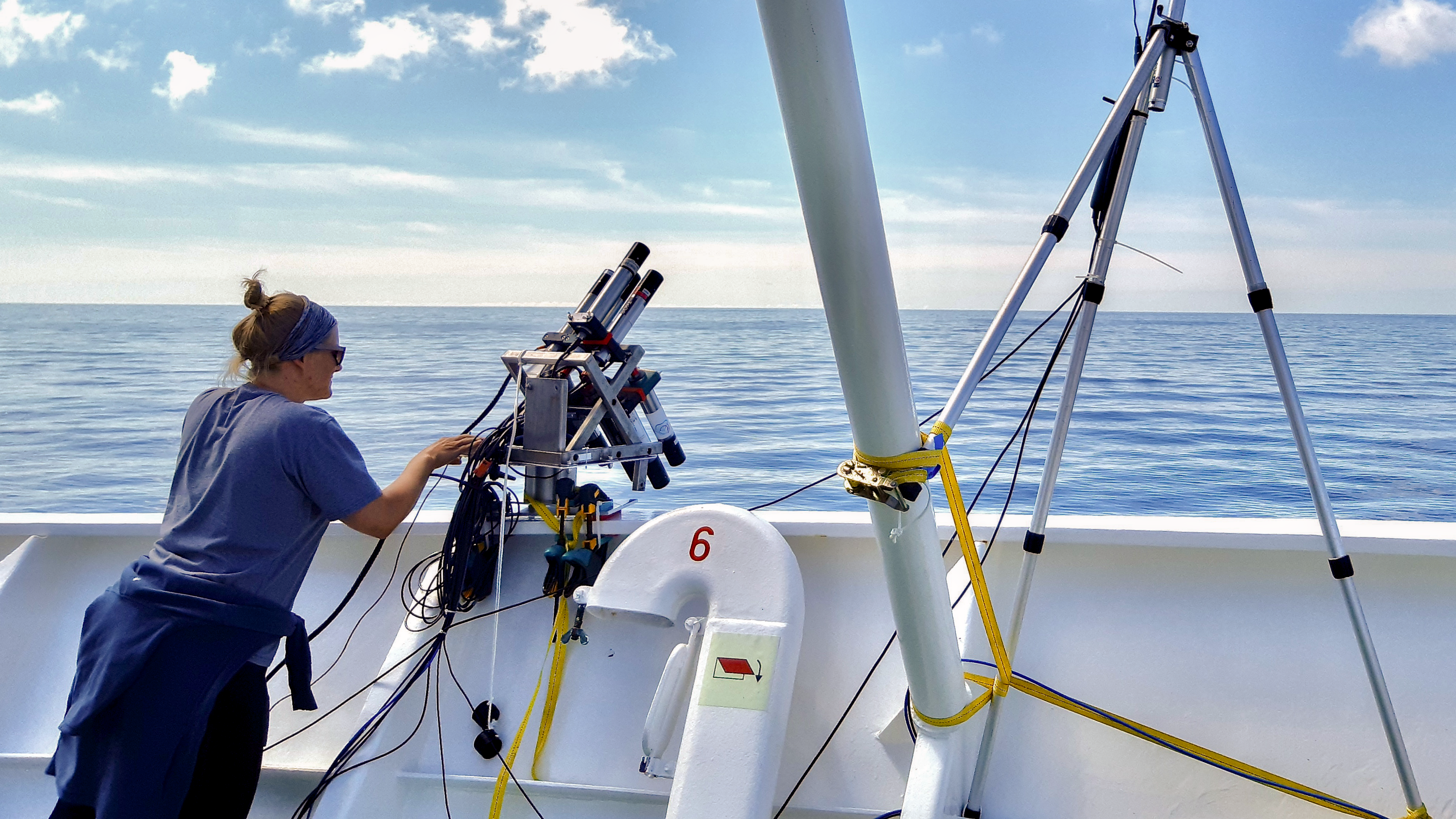
A complete, fully operational, calibrated and characterised radiometric system for in-situ above-water OC measurements is available for a short-term loan to the OC community via the FRM4SOC-2 project. The system is intended to support the collection of high-quality OC data in dedicated measurement campaigns.
Description of the system
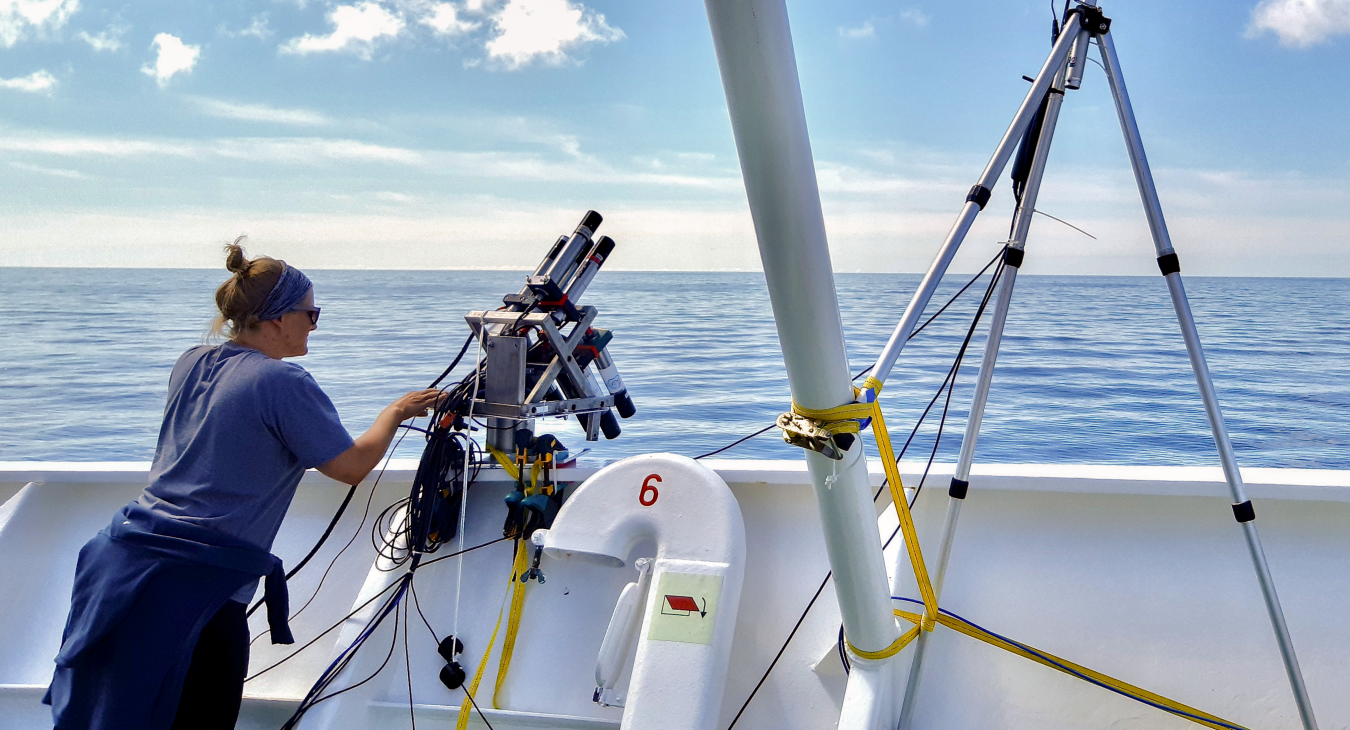
The system consists of three above-water TriOS Ramses radiometers (1 irradiance, 2 radiance), a connector box, a computer with installed software, cables, mounting brackets, and other accessories, guides and documents for prompt deployment of the system. The system is calibrated and fully characterised in accordance with the FRM guidelines.
Conditions
All research groups conducting in situ OC radiometry measurements worldwide are encouraged to apply.
- The Copernicus Programme will support the short-term loan of the OC measurement system for one applicant.
- Priority (not exclusive) will be given to applicants affiliated with institutions from Copernicus-contributing countries.
- Applications related to participation in dedicated (especially bio-optical) field campaigns to provide FRM will be prioritised (not exclusive).
- The system will be available for use for two months in the time period from September 2026 until May 2027.
- The selected applicant must
complete the 1.5-day online training offered as part of the opportunity (see the details below)
adhere to the IOCCG and FRM4SOC-2 guidelines for data collection and processing
process all in-situ measurements acquired in the context of the initiative with the HyperCP community processor
publish the raw and processed data at the Copernicus Ocean Colour In-situ database (OCDB), DOI reference available
provide a report showing the detailed results, including a Data Package that contains all the relevant acquired and ancillary data, field pictures, and log sheets.
- When publishing the collected data and results, reference must be made to the Copernicus Programme and the FRM4SOC-2 project.
- The FRM4SOC-2 project will cover shipping and customs costs.
Online training
This opportunity includes a 1.5-day online training mainly targeted (but not tailored) to the recipients of the service. To be held in December 2026, the training comprises three half-day sessions covering:
- Collecting FRM-quality data
- basics of OC radiometer calibration and characterisation
- measurement protocols
- practical considerations for field activities before, during and after.
- Data processing and uncertainty evaluation using the HyperCP community processor.
- Submissions to OCDB and validation exercises with ThoMaS.
How to apply
Timeline:
- The call is open from 19 June to 31 August 2026
- The decision on successful applications will be made by 11 September 2026
The application shall contain a description of the
- background profile of the applicant (previous and current studies, references to past, ongoing, and planned projects and campaigns)
- previous experience working with above-water OC radiometer systems in general and specifically with TriOS Ramses systems
- motivation and purpose of using the loaned system (description of the related projects and campaigns, planned activities and measurements)
- expected time and duration of using the system.
The call is closed
2. Calibration of your own OC radiometer set
Tartu Observatory, University of Tartu will provide absolute radiometric calibration for four sets (i.e. 3 radiometers per set) of OC radiometers in accordance with the FRM guidelines published at https://frm4soc2.eumetsat.int. As a result, the calibration files will be provided in the original manufacturer's format and in the FRM4SOC-2 format (compatible with the HyperCP community processor). The calibration is accredited as compliant with ISO 17025:2017 and includes uncertainty estimates for the response factors.
Conditions
All research groups performing in situ measurements of OC radiometry around the world are encouraged to apply.
- The Copernicus Programme will support the free calibration of a set of either TriOS Ramses or Sea-Bird Scientific HyperOCR radiometers (1 irradiance, 2 radiance) for four applicants.
- Priority (not exclusive) will be given to applicants affiliated with institutions from Copernicus-contributing countries.
- Applications related to participation in dedicated (especially bio-optical) field campaigns to provide FRM will be prioritised (not exclusive).
- Radiometer calibrations can be performed up to May 2027.
- The original manufacturer-provided calibration files for your radiometers must be available for the initial configuration of the calibration setup.
- The new calibration files for your radiometers will be uploaded to the public FidRadDB database.
- Selected applicants must
- complete the 1.5-day online training offered as part of the opportunity (see the details below)
adhere to the IOCCG and FRM4SOC-2 guidelines for data collection and processing
process all in-situ measurement data acquired in the context of the initiative and during the calibration validity period (1 year) with the HyperCP community processor,
publish the raw and processed data at the Copernicus Ocean Colour In-situ database (OCDB), DOI reference available
provide a report showing the detailed results, including a Data Package that contains all the relevant acquired and ancillary data, field pictures, and log sheets
- When publishing the collected data and results, reference must be made to the Copernicus Programme and the FRM4SOC-2 project.
- The FRM4SOC-2 project will cover shipping and customs costs.
Online training
This opportunity includes a 1.5-day online training mainly targeted (but not tailored) to the recipients of the service. To be held in December 2026, the training comprises three half-day sessions covering:
- Collecting FRM-quality data
- basics of OC radiometer calibration and characterisation
- measurement protocols
- practical considerations for field activities before, during and after.
- Data processing and uncertainty evaluation using the HyperCP community processor.
- Submissions to OCDB and validation exercises with ThoMaS.
How to apply
Timeline:
- The call is open from 19 June to 31 August 2026
- The decision on successful applications will be made by 11 September 2026
The application shall contain a description of the
- background profile of the applicant (previous and current studies, references to past, ongoing, and planned projects and campaigns),
- motivation and purpose of calibration (description of the related projects and campaigns, planned activities and measurements),
- expected time of the calibration.
The call is closed
Contact
The Executive Committee
Dr Riho Vendt - Tartu Observatory, University of Tartu, Estonia
Dr Giuseppe Zibordi - EOScience, Italy
Dr Juan Ignacio Gossn - EUMETSAT - European Agency for the Exploitation of Meteorological Satellites
Dr Ewa Kwiatkowska - EUMETSAT - European Agency for the Exploitation of Meteorological Satellites
In case of any questions, please contact applications.frm4soc-2@TartuUlikool.onmicrosoft.com